

Confidence is not a personality trait you either have or do not have, it is a skill you can build one class at a time.
If you have been searching for Martial Arts in Austin, TX, there is a good chance you want something deeper than a workout. Most people who walk into our training space are looking for real confidence: the kind that shows up when you speak up in a meeting, set a boundary, or simply feel comfortable in your own skin.
That goal is more common than most people realize. Industry research shows martial arts participation climbed about 15 percent year over year in 2024 to 2025, and 68 percent of students say confidence building is a primary reason they start. Here in Austin, with long workdays, tech burnout, and a lot of people trying to do everything at once, training becomes a practical way to steady your mind and strengthen your body.
This guide breaks down exactly how we help you build confidence through Martial Arts, with a clear progression you can follow. No vague hype, just steps you can actually use, starting with your first class.
Why Martial Arts builds confidence faster than most hobbies
Confidence grows when your brain collects proof. In Martial Arts, you get proof constantly: you learn a movement, you practice it, you feel it work, and you repeat it until it becomes yours. That loop is powerful because it is measurable. You are not guessing if you improved, you can feel it in your balance, your breathing, and your ability to stay calm under pressure.
There is also a mental health component that gets overlooked. A 2024 sports psychology study on self defense focused styles like Jiu-Jitsu found about 75 percent of participants reported a 20 to 30 percent reduction in anxiety after three months. That is not magic, it is exposure and adaptation. You learn to handle discomfort in a safe environment, and daily life starts to feel less sharp around the edges.
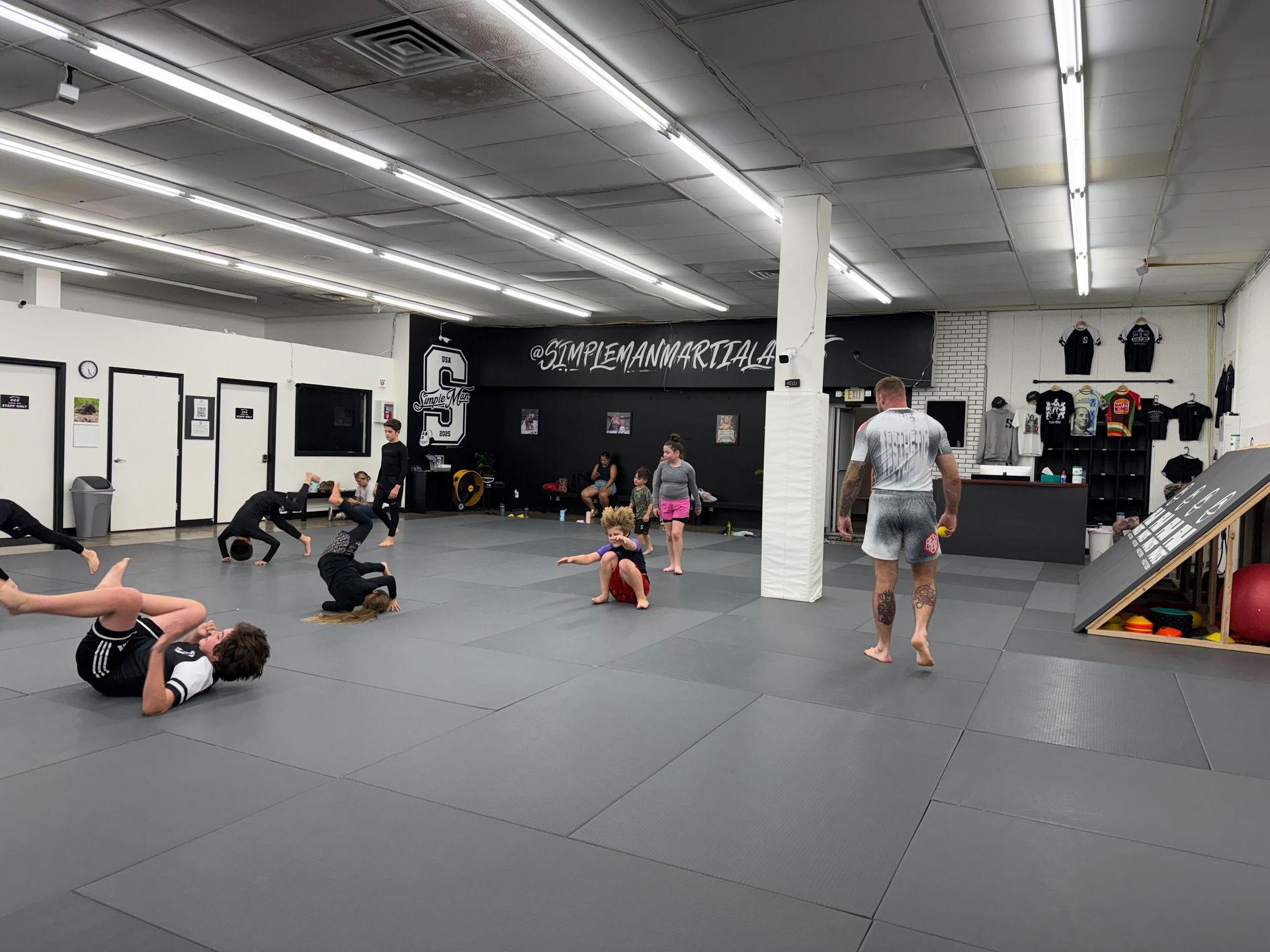
In Austin, classes typically run in smaller groups, often around 12 to 15 people, which matters. A room that size lets us coach you, correct details, and make sure you are training safely. It also helps you feel seen without feeling put on the spot, which is a real concern for beginners.
Step 1: Start with a simple first win (your first class)
Your first step is not to be tough. Your first step is to show up, get oriented, and leave knowing you can come back. We structure the first class so you can participate right away, even if you have never done Martial Arts before.
You will learn how to move with posture and balance, how to protect your neck and joints, and how to communicate with a training partner. Those may sound like small things, but they are foundational. When you know what to do with your body, your mind settles down.
A practical tip: give yourself permission to be new. Bring water, wear comfortable training clothes, and plan to arrive a few minutes early so you are not rushing. Starting calm is part of building confidence, too.
Step 2: Build a foundation with no-gi Jiu-Jitsu basics
Our core confidence builder is grappling, especially no-gi work, because it creates honest feedback. If your posture is off, you notice. If your timing is late, you notice. And when you fix it, you notice that, too.
In the early weeks, we emphasize fundamentals that translate to real self defense and everyday composure:
• Base and posture so you can stay balanced when someone pushes or pulls
• Frames and escapes so you can create space and get back to safety
• Clinch awareness so you are not surprised when distance closes
• Controlled positional work so you can practice without chaos
This is where the phrase South Austin Jiu-Jitsu becomes more than a search term. It becomes a routine. You learn a small set of movements that keep you safe, and your confidence starts to feel grounded, not performative.
Step 3: Use drilling to turn knowledge into instinct
There is a big difference between understanding a technique and being able to do it under pressure. Drilling bridges that gap. You repeat the same movement with increasing precision until it becomes automatic, which frees up mental bandwidth. When your body knows what to do, your mind stops panicking.
We keep drilling practical. Instead of doing endless complicated sequences, we focus on high percentage movements that show up again and again. You will start to notice patterns: how to keep your elbows safe, how to recover guard, how to stand up without giving your back. Those patterns are confidence, because they reduce uncertainty.
If you like tangible progress, keep a simple training journal. Write down one thing you learned, one thing you struggled with, and one small win each class. It sounds almost too basic, but it makes improvement visible, especially on weeks when you feel tired.
Step 4: Add controlled sparring (the confidence accelerator)
At some point, you need a live test. Controlled sparring, often called rolling, is where confidence really locks in. The goal is not to dominate anyone. The goal is to practice staying calm while someone gives you real resistance.
We introduce live rounds progressively so you do not feel thrown into the deep end. You will learn how to tap early, how to protect yourself, and how to reset after a tough round. That reset is important. A lot of confidence comes from realizing you can have a hard moment and still be okay.
An APA meta-analysis in 2025 linked step-by-step progression systems in martial arts to about a 40 percent boost in self efficacy. That matches what we see on the mats. Small wins stack up, and after a few months you carry yourself differently. Your shoulders come down. Your voice gets steadier. People notice, including you.
Step 5: Train self defense scenarios that fit real life in Austin
Confidence is strongest when it feels relevant. We include self defense context so you understand what matters outside the gym: distance, awareness, and simple decisions under stress. You will practice how to create space, how to stand up safely, and how to avoid getting stuck in a worst case position.
Austin is a friendly city, but it is still a city. Urban safety is not about living in fear, it is about having options. We want you to leave class feeling more capable, not more paranoid. That balance is part of our culture.
We also talk through the practical side: when to disengage, when to run, and how to de-escalate. Martial Arts should make you calmer and more responsible, not reckless.
The confidence timeline: what to expect in your first 6 months
Most people want to know how long it takes to feel different. The honest answer is that you will feel a shift quickly, but the deeper change builds over months. Based on what students commonly report and what broader research suggests, here is a realistic timeline:
1. Weeks 1 to 2: You feel less intimidated by the environment and you learn basic movement and safety habits.
2. Weeks 3 to 6: You recognize positions and you start escaping with purpose instead of guessing.
3. Months 2 to 3: Your cardio improves, anxiety often drops, and you can handle controlled sparring with more composure.
4. Months 4 to 6: You connect techniques, you recover faster after tough rounds, and confidence starts showing up in work and relationships.
This is also when training becomes a habit rather than a project. You stop asking if you belong and start thinking about what you want to improve next.
What makes our membership and training experience beginner friendly
Martial Arts can look intimidating from the outside, so we design the experience to be straightforward. You should not need to decode a culture to get started.
Here is what you can expect from our programs and day-to-day training environment:
• Clear coaching and structured classes so you know what you are working on and why
• Beginner friendly pacing with options to scale intensity up or down depending on your day
• A practical no-gi focus that keeps the learning curve simple and applicable
• A welcoming community where partners help you learn instead of trying to win practice
• Membership options that support consistency, because confidence is built through repetition
If you are juggling work, family, and Austin traffic, consistency is the real superpower. We would rather you train steadily than burn out trying to do everything at once.
Common questions we hear from Austin beginners
People ask similar questions, and asking them is a good sign. It means you are thinking clearly.
If you are worried about being out of shape, you are not alone. Our classes help you build fitness while you learn skills, and you can take breaks when you need them. If you are nervous about sparring, we ease you into it. If you are curious about women’s self defense, we keep training respectful, technical, and focused on control.
And if you are a little skeptical that Martial Arts can change how you feel day to day, that is fine. You do not need to believe in it ahead of time. You just need to train consistently enough to collect evidence.
Take the Next Step
Building confidence is not about becoming a different person, it is about becoming harder to shake. At Simple Man Martial Arts, we keep the process practical: learn fundamentals, drill them until they stick, test them safely, and build a routine that supports you outside the gym.
If you are looking for South Austin Jiu-Jitsu that stays grounded in real skill, real coaching, and real progress, we would love to help you get started and keep it simple in the best way.
New to martial arts? Start your journey by joining a beginner-friendly class at Simple Man Martial Arts.