The techniques people stick with are the ones that feel practical fast and keep getting better the longer you train.
Austin has a way of turning hobbies into lifestyles, and Martial Arts fits that pattern perfectly. Most people who walk into our gym are not looking for movie moves. You want skills you can actually use, training that makes you feel stronger week to week, and a room full of people who take improvement seriously without making it weird.
Our approach to Martial Arts in Austin starts with fundamentals and stays grounded in real outcomes: safer movement, better decision-making under pressure, and conditioning that carries into your daily life. We build skill through progressive drilling, controlled intensity, and coaching that meets you where you are, whether you are brand new or returning after a long break.
In this guide, we are sharing the top techniques Austin locals love to master because they solve real problems. You will see a blend of striking, clinch work, and grappling, plus the simple strength work that makes every technique sharper.
Why these are the favorite techniques in Martial Arts in Austin
The best techniques are not always the flashiest. Locals tend to commit to techniques that check three boxes: they work under stress, they scale with your fitness level, and they give you a clear path to mastery. When a technique is easy to understand but hard to perfect, it stays interesting for years.
Austin also has an active culture, which means many students care about performance as much as self-defense. People want hips that move better, shoulders that feel healthier, and cardio that does not wreck their joints. So we focus on methods that build you up instead of grinding you down.
Finally, community matters here. People keep showing up when they feel supported and challenged. That is why we train skills that are easy to practice with partners safely, with structure and purpose, instead of random chaos.
The core skill behind everything: base, posture, and pressure
Before we get into individual techniques, there is one shared thread across Martial Arts styles: your base. If your stance collapses, your punches lose power. If your posture breaks, your balance disappears. If you cannot manage pressure, everything feels like it is happening too fast.
We coach base through footwork, hip alignment, and breathing. This is not mystical. When you learn to keep your spine stacked and your feet organized, you hit harder, you defend faster, and you waste less energy. It also makes training feel better on your body, especially if you sit a lot for work.
A small but real shift happens when you start paying attention to pressure. Instead of muscling techniques, you learn to direct weight and leverage. That is where beginners start surprising themselves.
Top technique 1: Boxing style straight punches for clean power
Straight punches are popular because you can feel progress quickly. When you learn to send a jab and cross down a clean line with your hips behind it, you get that satisfying snap and structure. More importantly, straight punches teach timing, distance, and defensive responsibility.
We emphasize a tight guard, chin tucked, and shoulders working as armor. Good punching is not just offense, it is protection. You learn to hit without falling forward, and you learn to recover instantly back into balance.
For real-world self-defense, straight punches also make sense because you do not need perfect flexibility or fancy setups. You need accuracy, stability, and the ability to disengage when appropriate.
Top technique 2: Low kicks and simple kick defenses you can repeat
Kicks are fun, but the kicks people actually keep are the ones they can land safely and consistently. Low kicks teach you how to generate power from the ground and how to control range without overcommitting. They also condition your hips and legs in a way that shows up in everything else you do.
We pair kicking with kick defense early. Checking, stepping out, and returning to stance is a skill on its own. If you can defend and immediately reset your base, you stay calm. That calm is a big deal when adrenaline spikes.
Over time, you start to see the pattern: the best kick is the one that does not cost you balance.
Top technique 3: JKD inspired trapping to close distance fast
Austin students love trapping because it feels practical and direct. JKD training is built around efficiency, using tools from boxing, kickboxing, Wing Chun concepts, Savate, and even fencing-like footwork ideas. Trapping fits into that mindset because it teaches you how to clear hands, create openings, and shut down a flurry before it becomes a problem.
We treat trapping as a bridge skill. It connects striking range to clinch range, and it helps you manage the messy moment when distance collapses. Instead of trading wildly, you learn to control the line, pin or redirect arms, and move into a safer position.
Trapping also teaches sensitivity. You start noticing tension in your partner’s arms and shoulders, and you learn to exploit that tension rather than fight it head-on.
Top technique 4: Clinch control for real-world balance and safety
If you want a skill that shows up in self-defense scenarios, it is clinch work. Many confrontations end up chest-to-chest or shoulder-to-shoulder, and the clinch is where posture and leverage matter more than speed.
We coach head position, underhooks, frames, and small off-balances. The goal is not to win a wrestling match in the parking lot. The goal is to control the situation long enough to make smart choices: create space, redirect, or take the opponent down if you must.
Clinch training also builds grit in a healthy way. It is tiring, it is awkward at first, and it forces you to breathe. That is why people love it once it clicks.
Top technique 5: Takedown entries that do not require perfect athleticism
People sometimes assume takedowns are only for natural athletes. In reality, the takedowns that stick are the ones based on timing and positioning. We focus on entries that keep your spine safe, protect your head, and set up top control.
That includes learning to change levels correctly, using angles, and understanding when not to shoot. A big part of takedown skill is decision-making. If you learn to feel when the opening is real, you get taken down less often and you land your own takedowns more cleanly.
Takedowns also make your striking better because you stop reaching. When you know you can enter safely, your hands relax and your movement improves.
Top technique 6: South Austin Jiu-Jitsu essentials for control on the ground
Groundwork is a favorite in Martial Arts in Austin because it gives smaller people a reliable path to control. When striking gets chaotic, grappling gives you structure: positions, escapes, and steady progress. Our South Austin Jiu-Jitsu curriculum centers on fundamentals that hold up in real life and in sport style rolling.
We start with positional survival and control. That means learning how to stay safe in bad positions and how to stabilize good ones. You learn to breathe under pressure, build frames, and move your hips with purpose instead of panic.
A few staples students love to master include guard retention, side control pressure, mount stability, and back control. Each position has simple goals, and that clarity helps you train with confidence even when you are tired.
Top technique 7: Escapes first, because confidence comes from exits
People often think confidence comes from submissions or flashy finishes. In our experience, confidence comes from knowing you can get out. Escape training is one of the most empowering parts of Martial Arts because it gives you options when you feel stuck.
We drill escapes from mount, side control, and back control with a focus on timing and safe movement. When you learn to connect small actions, like framing, hip escaping, and re-guarding, you stop feeling trapped. You start thinking again.
This is also where training feels most honest. Escapes are not always comfortable, but the payoff is huge: you become harder to hold down, and your posture improves even outside the gym.
Top technique 8: Simple submissions with high percentage mechanics
We do teach submissions, but we teach them as a result of control. Submissions that students tend to love are the ones that make sense mechanically and do not rely on strength alone. When you align your body correctly, the technique works with less effort.
Common examples include chokes from stable positions and joint locks that come from controlling the elbow line. We coach details like grip placement, angle, and how to keep your base while you finish. The goal is to stay safe and technical, not reckless.
Submissions also teach restraint. You learn to apply pressure gradually and respect the tap. That culture keeps training productive for the long haul.
The conditioning staples that make techniques feel easier
Technique matters most, but your body still needs support. We keep conditioning simple and repeatable because consistency beats intensity that you cannot maintain. If you want a starter plan that complements Martial Arts, here is what we recommend for many beginners:
• Squats for leg drive and stable stances, using a range of motion you can control
• Push-ups for shoulder stability and pressing strength that supports frames and punches
• Bicycle sit-ups or other core variations for rotation and posture under pressure
• Light jump rope or steady cardio for footwork rhythm and recovery between rounds
• Mobility work for hips and shoulders so you can train more often without feeling stiff
You do not need fancy equipment. You need a routine you can actually do between classes.
How we help you master faster: the training method that keeps it real
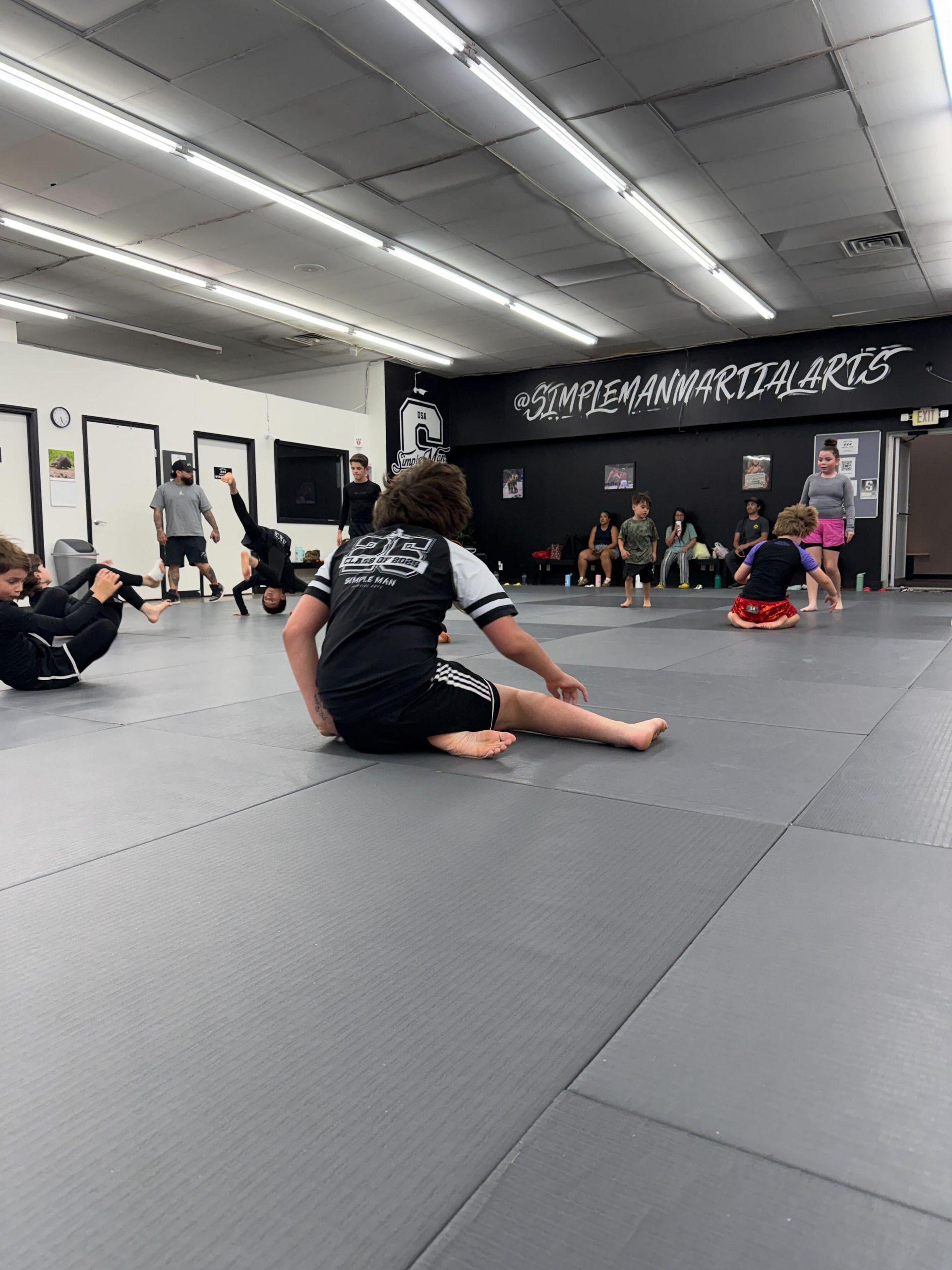
Progress in Martial Arts is not random. We structure classes so you get repetition without boredom and intensity without chaos. You will usually move through a pattern: learn the movement, drill with feedback, add resistance, then pressure test in a controlled way.
We also pay attention to the human side of learning. Some days you feel sharp, other days you feel clumsy. That is normal. Our job is to keep the process steady so you can improve even when motivation dips.
If you are training for self-defense, we emphasize awareness, distance management, and realistic decision-making. If you are training for fitness, we keep you moving with purpose. Either way, you can check the class schedule to find times that make consistency realistic.
What you can expect in your first few weeks
The first few weeks are about building trust in the basics. You will learn how to move safely, how to work with partners, and how to keep your breathing under control. You will probably sweat more than you expect, and you might laugh at how challenging simple things can feel at first. That is part of the process.
Here is the typical progression we aim for:
1. Learn foundational stance, movement, and safe falling mechanics where needed
2. Drill one or two core techniques with clear goals and partner cooperation
3. Add simple problem-solving, like escapes or controlled entries
4. Build conditioning naturally through rounds and structured practice
5. Review and refine so you leave class with something you can remember
Consistency beats talent early on. Show up, stay curious, and let the skill build.
Take the Next Step
If you want Martial Arts training that stays practical, gets you in better shape, and gives you a clear roadmap from basics to mastery, we built our programs to do exactly that. You will learn striking, clinch control, and South Austin Jiu-Jitsu fundamentals in a way that respects safety while still preparing you for real pressure.
When you are ready, Simple Man Martial Arts is here in Austin with a supportive training room, structured classes, and coaching that helps you improve without getting overwhelmed. Use the website to explore the program details and pick a starting point that fits your schedule.
Train with purpose and see real progress by joining a martial arts program at Simple Man Martial Arts.