You can walk into class tense and walk out feeling lighter, clearer, and more in control.
Stress in Austin is a funny thing - it can come from the big stuff (deadlines, bills, family schedules) and the small stuff (traffic, notifications, another meeting that could have been an email). The good news is that martial arts gives you a practical way to deal with stress in your body, not just in your head.
We see it all the time: you don’t need months of experience to get real relief. A single session can flip the switch from “wired” to “steady” because training pulls your attention into the present and gives your nervous system a clear signal that it’s safe to downshift.
In this guide, we’ll show you fast-learned, beginner-friendly techniques you can start using right away, plus how our classes in Austin are structured to help you keep those benefits week after week.
Why martial arts works for stress (and why it feels different than “just working out”)
Most stress management advice lives in the realm of ideas: think positive, set boundaries, get more sleep. Those help, but stress is also physical. Your body carries it in your shoulders, your jaw, your breathing, and the way your mind loops on the same problems.
Martial arts gives you a structured way to discharge tension and rebuild control. Research from the last few years continues to support what practitioners have felt for decades: training can lower stress hormones like cortisol, encourage endorphin release, and activate the parasympathetic nervous system (the “rest and digest” mode). The structure matters, too. Repetition, clear goals, and feedback create a kind of moving mindfulness that general workouts often don’t.
Just as important, martial arts improves emotional regulation. You practice staying calm while doing something challenging, and that skill transfers. Work stress doesn’t vanish, but your response changes.
The “fast relief” foundation: what we teach first
When your goal is stress relief, we focus on a few fundamentals that give you a quick win without requiring athleticism or flexibility. You don’t have to be “in shape” to start; getting in shape is one of the side effects.
Breath you can feel: the 5 minute reset
If you only learn one thing, make it this: breathing is a remote control for your nervous system. Under stress, breathing gets shallow and fast. In training, we coach you to bring it back down on purpose.
Here’s a simple reset you can do before class, after work, or even sitting in your car (parked, of course):
1. Stand tall with your feet under your hips and soften your shoulders.
2. Inhale through your nose for a slow count of 4.
3. Exhale through your mouth for a slow count of 6.
4. Keep your jaw relaxed and your hands unclenched.
5. Repeat for 10 rounds, then notice how your eyes and forehead feel.
Longer exhales are a gentle way to tell your body, “We’re not in danger.” Once you pair that breathing with basic movement, the effect gets stronger.
Stance and posture: stress shows up in your body language
A lot of people don’t realize how much stress changes posture. Shoulders forward, chin tucked, hips stiff, weight uneven. A stable stance is not only a martial arts skill, it’s a stress skill.
In class, we practice standing in a balanced, athletic position. It’s grounded and mobile at the same time. Over time, that becomes your new default. You look more confident, but more importantly, you feel more capable - and that changes how stress lands.
Simple striking drills that clear your head quickly
You don’t need fancy combinations to get the mental benefits. Basic, repeatable strikes are perfect for beginners because they’re easy to learn and naturally rhythmic.
Jab cross: the two punch pattern that organizes your mind
The jab cross is simple: one straight punch, then the other. We teach it with attention to alignment (wrist, elbow, shoulder) and relaxed power. When you repeat it for a few rounds, your brain stops multitasking. You can’t overthink and coordinate clean strikes at the same time.
We also coach a key stress detail: don’t hold your breath. Exhale on each strike. That small change makes the drill feel calming instead of frantic.
Low kicks: let your legs carry the workload
Legs are made for work, and using them is a great way to burn off anxious energy. A controlled low kick drill builds balance, hip mobility, and a strong connection to the ground.
If you sit all day (a lot of Austin does), the hips and lower back take on stress. Kicking drills counter that with movement that’s purposeful and surprisingly freeing. You’ll usually feel your breathing open up after a few minutes.
Shadowboxing as moving meditation
Shadowboxing sounds like “fighting the air,” but it’s one of the best stress relief tools we use. No partner, no pressure, just you practicing movement, breathing, and awareness.
Try this three minute round at home:
• Round 1: move lightly and only use the jab cross
• Round 2: add a low kick after every two punches
• Round 3: slow it down and make every move clean and balanced
Keep it light. This is not about exhaustion. It’s about clarity.
The mental side: why routine and skill-building reduce anxiety
Stress often comes from feeling out of control. Martial arts training gives you a measurable way to improve. You learn a stance, then footwork, then a few strikes, then a basic defense, then a simple partner drill. That progression builds real confidence because it’s based on evidence: you can do more today than you could last month.
Studies in recent years have linked martial arts practice to reductions in anxiety and depression symptoms, and to improvements in resilience and self-esteem. Part of that is physiological, but part is psychological: you practice challenge with structure. You learn to stay present under pressure.
And the routine helps. When life is messy, walking into a consistent class format is grounding. Warm-up, technical work, drilling, cooldown. Your mind gets a break from decision fatigue.
A short “Austin stress” routine you can do on busy days
We live here too, and we know the pattern: long workdays, traffic, screens, and then trying to switch instantly into family mode or social mode. On days when you can’t make it to the gym, use this 12 minute routine to reset.
12 minutes to downshift (no equipment)
1. 2 minutes: the 4 in, 6 out breathing reset
2. 3 minutes: light shadowboxing, jab cross only
3. 3 minutes: add low kicks, easy pace
4. 2 minutes: slow footwork, forward and back, stay balanced
5. 2 minutes: quiet breathing again, shoulders loose
If you do this consistently, you’ll start recognizing stress earlier, before it snowballs.
Beginner safety: what to expect if you’re new (or nervous)
A lot of people want martial arts in Austin, TX for stress relief but worry about getting hurt or feeling out of place. We take that seriously. Our beginner training is progressive, with coaching that emphasizes control, good mechanics, and smart pacing.
Here’s what we focus on early so you can train confidently:
• Clear fundamentals before intensity, so your body learns safe alignment
• Options for scaling up or down, depending on energy and experience
• Partner drills that prioritize communication and control
• Conditioning that builds steadily, not “crush you on day one”
• Coaching that keeps you present, not overwhelmed
You should leave class feeling worked, but better than when you walked in. That’s the point.
How fast you’ll feel results (and what “progress” looks like)
Most people feel a shift after the first session: better mood, quieter mind, looser shoulders, deeper sleep that night. Research has noted that cortisol can drop after training sessions, and that emotional regulation improves with consistent practice.
Long-term stress relief comes from stacking reps. Two to three classes per week is a sweet spot for many students, but even once a week can be meaningful if you stay consistent and practice a few minutes at home.
Progress for stress relief usually looks like this:
• Week 1 to 2: you feel calmer after class, and you start sleeping better
• Week 3 to 6: your baseline stress feels lower, and you recover faster from bad days
• Month 2 and beyond: you notice more confidence, better focus, and fewer “spikes” in anxiety
It’s not magic. It’s training. And that’s actually reassuring.
Martial arts in Austin: why community matters for stress
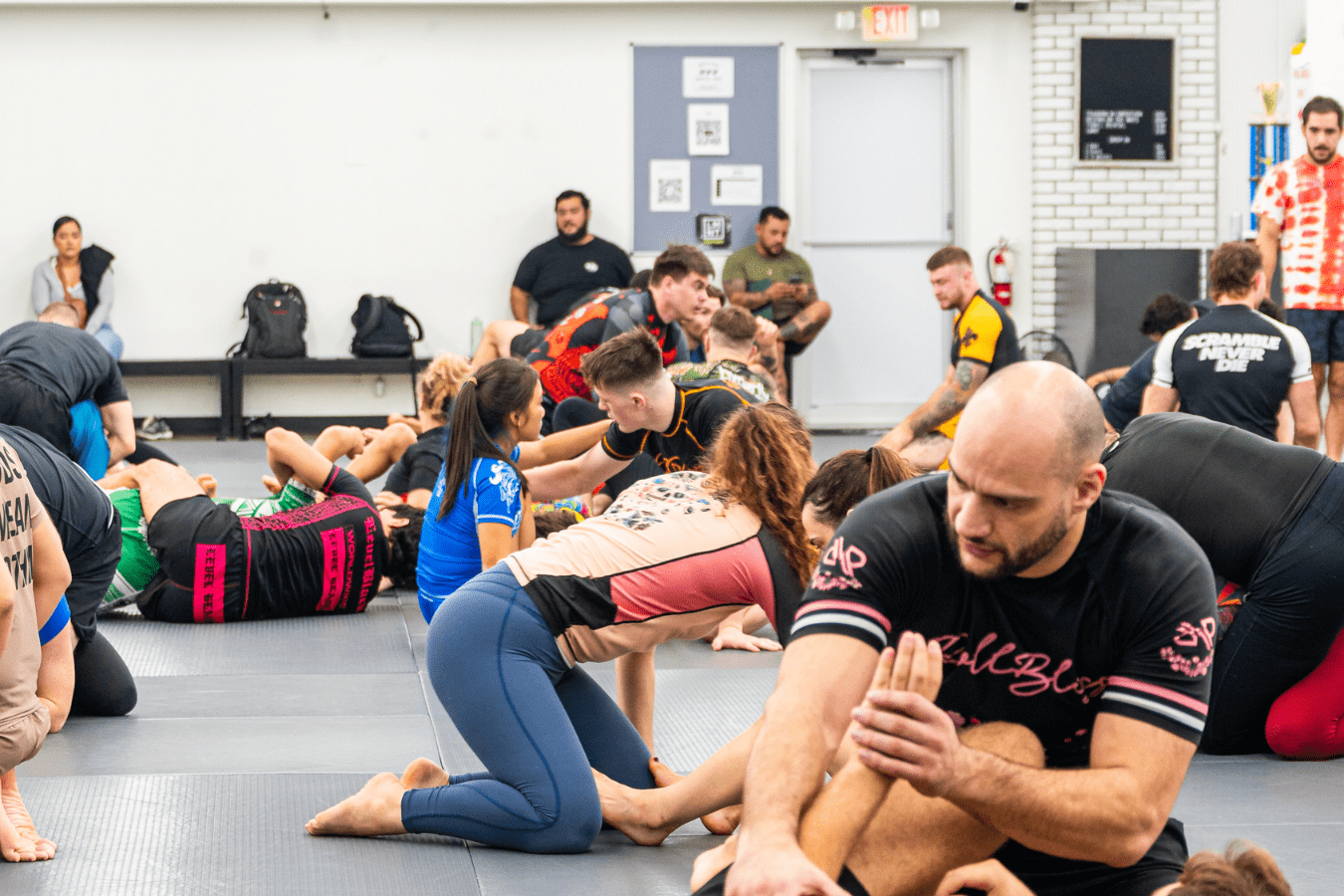
Stress thrives in isolation. One underrated benefit of training is that you’re around people doing something challenging in a positive way. You share effort, you learn together, and you get real-time feedback instead of spinning in your head.
In our classes, you’ll hear cues like “breathe,” “relax your shoulders,” “stay balanced,” and “smooth is fast.” Those reminders become mental habits you take into daily life. Even in Austin traffic, you’ll catch yourself unclenching your jaw and exhaling. It sounds small, but it adds up.
Take the Next Step
Building a stress-resistant body and mind doesn’t require complicated routines. It takes a few reliable techniques, coached well, and practiced consistently. That’s exactly how we run our training at Simple Man Martial Arts: beginner-friendly structure, practical movement, and a class environment where you can work hard without feeling thrown into the deep end.
If you’re looking for martial arts in Austin that helps you feel calmer, more focused, and more capable, we’d love to help you start with the basics and build from there at Simple Man Martial Arts.
Train with purpose and see steady improvement by joining a martial arts class at Simple Man Martial Arts.