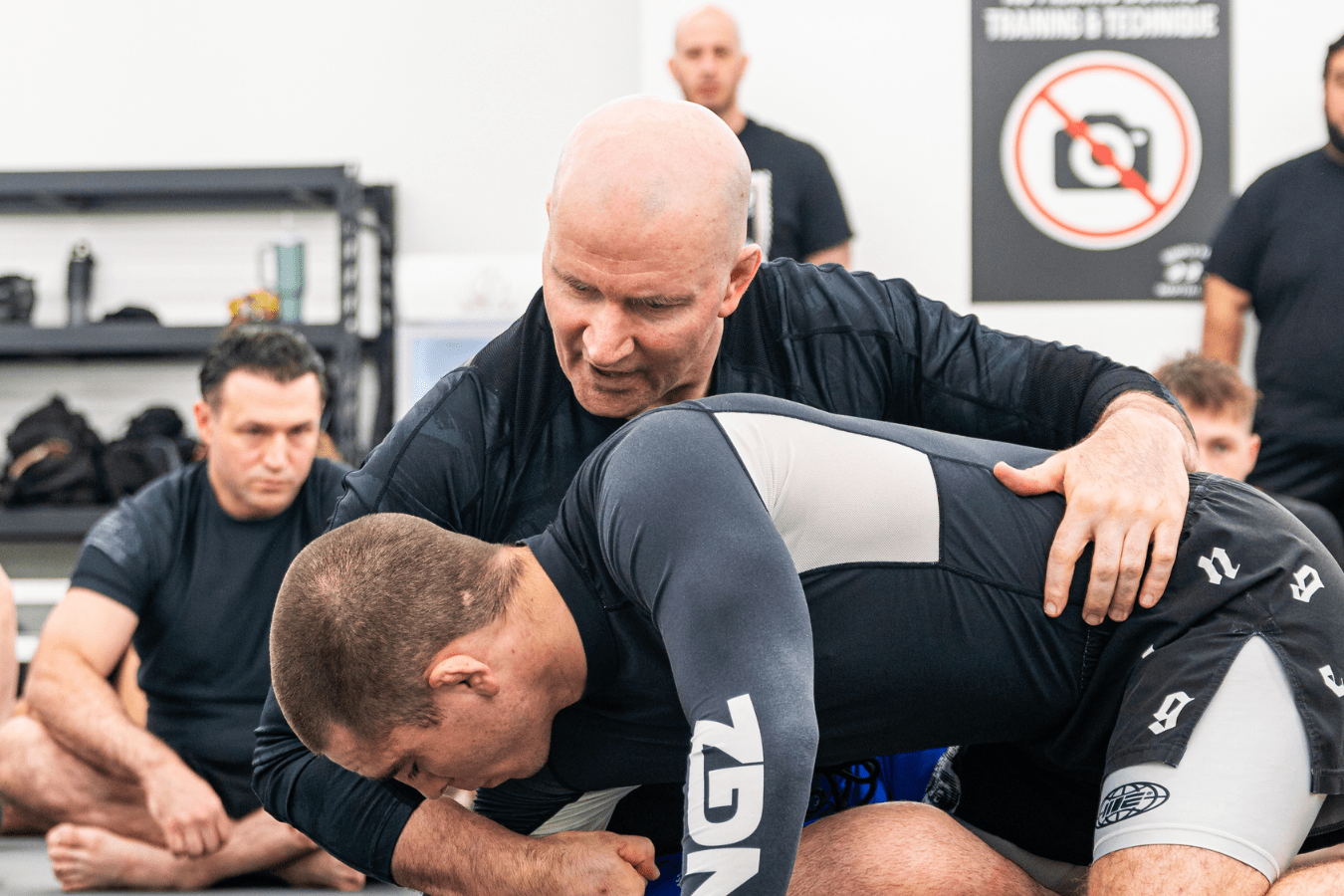
Practical training is what turns techniques into reactions you can rely on when things get fast and messy.
Martial arts can look polished from the outside, but real self-defense rarely is. In the moment, you do not get perfect distance, a clean stance, or time to think through options. You get pressure, awkward angles, adrenaline, and somebody trying to put you on the ground or trap your arms.
That is why our approach to martial arts in Austin is built around transfer: skills you can actually use when a situation is resisting you. We focus on Brazilian Jiu-Jitsu fundamentals that show up in real life, like staying on your feet, getting back up safely, controlling clinches, and surviving weapon threats long enough to escape.
If you are searching for martial arts in Austin, TX because you want confidence that is earned, not imagined, the details of how you train matter. Pace matters. Resistance matters. And repeating the right patterns until you can do them under stress matters most.
Why real-world self-defense feels different than gym training
Self-defense is less about winning and more about problem solving under pressure. On the street, the surface is harder, space is tighter, and surprises are common. Even the small stuff changes the game, like slippery shoes, a backpack, a narrow hallway, or a curb that turns your base into a wobble.
We train with those realities in mind by emphasizing positioning, balance, and control first. A clean submission is great on the mats, but the self-defense skill underneath it is usually something simpler: controlling posture, protecting your head, and keeping your hips in a place where you can move.
Our classes also prioritize awareness and decision-making. Not every situation calls for engagement. Sometimes the best outcome is creating enough space to leave, and we treat that as a win because it is.
Martial arts in Austin: what people actually need day to day
Austin is active. People run the trails, spend time downtown, and move between work, gyms, and nightlife. With that lifestyle comes more time in public spaces and more chances for unwanted contact, whether it is a grab, an aggressive shove, or somebody trying to tackle you during a confrontation.
We see students come in with very practical goals:
• You want to feel comfortable walking to your car at night
• You want to handle someone grabbing your wrist, hoodie, or backpack strap
• You want to avoid being taken down onto concrete
• You want to know what to do if you end up underneath someone
• You want training that is intense enough to work, but still sustainable
This is exactly where grappling-based martial arts shine. You learn how to manage close-range chaos, not just trade strikes in open space.
The core self-defense skill: controlling the clinch and the takedown
A lot of real altercations collapse into clinching. Someone reaches, pushes, bear hugs, grabs your head, or shoots for your legs. If you cannot stop that momentum, you get put on the ground, and the situation escalates fast.
We spend serious time on takedown defense because it is a street-relevant skill that shows up again and again. One of the most important tools is the sprawl, done correctly. We teach you to drive your hips back and down with intent, use the floor for traction through your toes, and immediately fight grips so your legs are not being collected.
From there, we work the follow-ups that make the defense real. Not just stopping the takedown, but making the attacker carry your weight, breaking their connection, and moving to a safer angle where you can disengage or establish control.
A simple chain we build (and rebuild) in training
We do not treat techniques like single moves. We train them as connected decisions, because that is how they appear under stress:
1. Recognize the entry and lower your hips before you get lifted or driven back
2. Sprawl with heavy hips and active feet so you do not slide
3. Separate grips with urgent hand fighting instead of waiting
4. Angle off and either stand cleanly or transition to top control if needed
5. Reset and repeat with more resistance so your timing gets honest
That progression is where self-defense lives: not in the first rep, but in the hundredth rep when you are tired and it still works.
Guard work for self-defense: why we keep it tight and functional
People hear guard and think it is a sport position. The truth is, guard is a survival position first. If you get knocked down, slipped, or tackled, you need a structure that protects you while you create options to sweep, stand, or control.
We emphasize close guard principles because they help you manage size differences. In a self-defense context, we want you to break posture, keep an attacker from sitting up and striking, and control distance with your legs and frames. A loose, casual guard tends to turn into somebody smashing forward and pinning you, which is exactly what we want to avoid.
We also focus on details that are easy to miss when you only watch highlight clips, like keeping your heels engaged, pulling the head and shoulders into a compromised posture, and using strong grips that connect your upper body to your hips. The goal is not to collect points. The goal is to control and change the situation.
Escapes that work when your takedown fails
Not every shot you take will land, and not every scramble will go your way. Realistic training includes failure, because real life definitely does. When a takedown attempt stalls, you need an exit that keeps you safe and keeps you moving.
We drill escapes like the limp arm concept in specific situations where your arm gets caught during a shot or a scramble. The idea is straightforward: instead of fighting strength with strength, you remove the lever your opponent is using, rotate to a safer angle, and recover to a position where you can defend yourself.
This is one reason martial arts training feels so different when it is done with intent. You are not collecting techniques. You are learning to recognize the moment a plan is failing and switch without panic.
Knife defense: what we train, and what we do not promise
A weapon changes everything. If someone has a knife, there is no magic technique that makes it safe. So we teach weapon survival as a set of priorities, not as a cinematic finish.
Our approach is about control, position, and damage reduction long enough to escape. We focus on concepts like two-on-one control when available, tight seat belt style control when the angle is right, and using frames to keep the blade away from vital targets. The underlying message stays consistent: you are not trying to win a duel, you are trying to survive and get away.
That honesty is important. Martial arts should make you more capable, not overconfident. Training should give you better odds, not illusions.
What makes training transfer: progressive intensity and high-rep drilling
A technique that works in a quiet room can disappear when somebody is driving into you at 60 percent effort. We build skill by increasing intensity progressively so your body learns what the movement feels like against resistance.
You will often see rounds where we start with light speed drilling for a set time, then ramp up to moderate effort where each rep has a little fight in it. That middle zone is valuable. It is where you can still learn, but you cannot fake the mechanics.
Over time, this changes how you move. Your base gets lower without you thinking about it. Your hands start solving grips automatically. Your timing improves, and you stop freezing in transitions. That is the whole point of martial arts for self-defense: training your reactions while keeping you safe enough to train again tomorrow.
What you will learn in our real-world focused martial arts curriculum
We keep the curriculum grounded in positions and scenarios that show up most often in real encounters. While techniques evolve as you progress, the priorities stay consistent:
• Standing base, posture, and grip fighting to prevent a tackle or body lock
• Sprawls and immediate follow-ups to avoid being dragged down
• Tight guard and posture control to limit strikes and create sweeps
• Pressure passing concepts that work against strong resistance
• Escapes from bad positions with frames, angles, and get-ups
• Weapon survival concepts that focus on control and escape paths
If you are newer, we introduce these skills in a way that is approachable. If you are experienced, we sharpen them until they hold up when someone is truly trying.
Training in Austin without burning out: what beginners can expect
Many adults want martial arts in Austin, TX but worry the room will be too intense or too technical. We get it. Starting something new can feel like drinking from a fire hose.
We run classes with structure and a clear pace. You will learn the movement first, then add resistance. Nobody is expected to be a tough guy on day one. The expectation is simply that you show up, learn, and build consistency. That is how self-defense becomes real: not a burst of motivation, but a habit.
And yes, you will sweat. You will also think, laugh a little, and occasionally realize you have been holding your breath during a scramble. That happens. You are learning.
Take the Next Step
If you want martial arts that translate to real-world self-defense, our programs are built to make the hard parts feel familiar: pressure, resistance, and imperfect positions. You do not need to become a different person to train effectively, but you do need a method that respects reality and keeps you progressing.
That is exactly what we focus on at Simple Man Martial Arts here in Austin, with training that blends fundamentals, high-rep drilling, and practical scenarios you can actually understand and use.
Apply what you learned here by joining a martial arts class at Simple Man Martial Arts.