

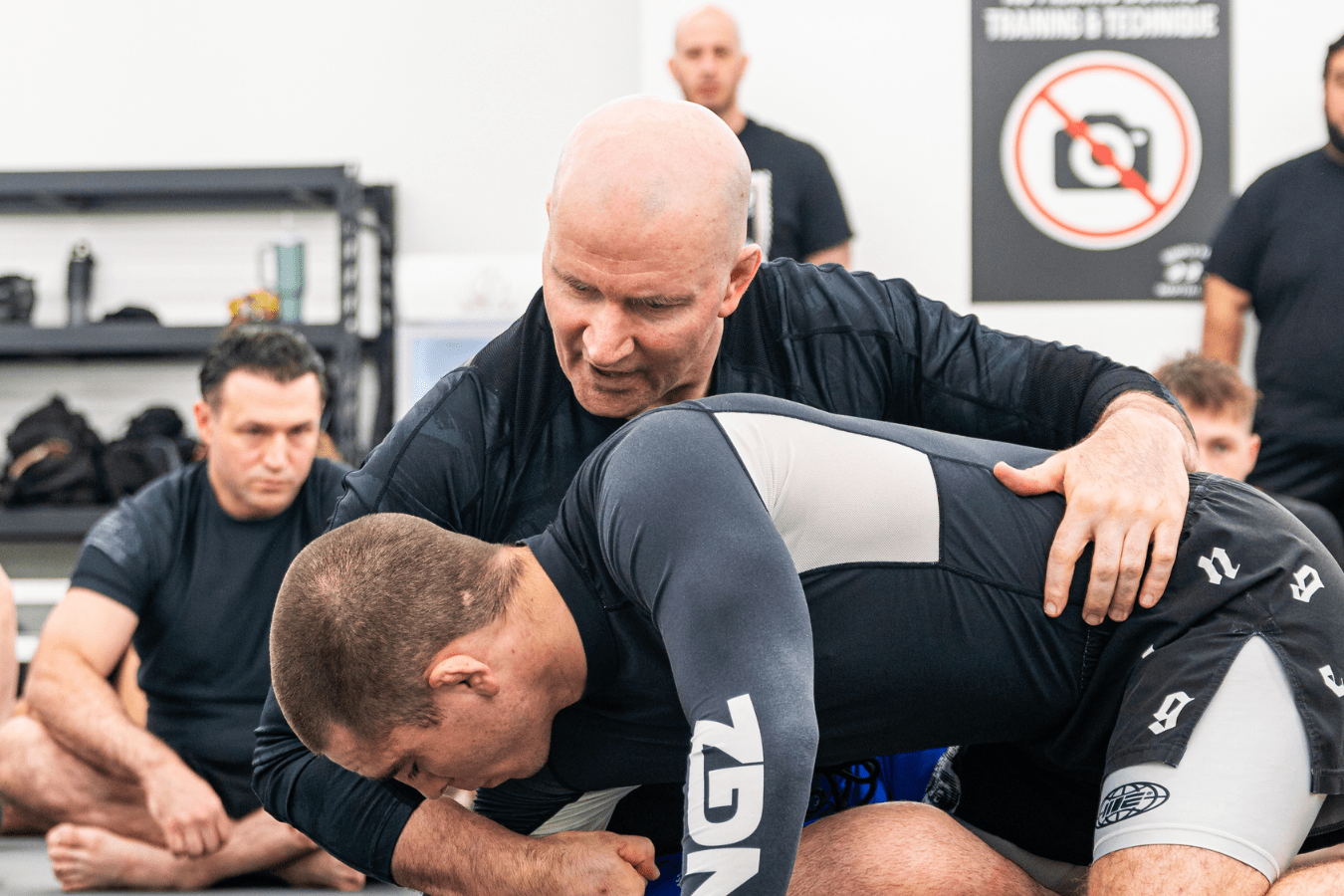
You do not need a background in fighting to start, you just need a plan you can follow and a room where you feel safe practicing it.
Starting martial arts can feel weirdly intimidating, even if you are excited. Most beginners are not worried about learning a cool kick on day one. You are usually wondering simpler things: What do I wear, will I slow everyone down, and how do I avoid getting hurt.
Here in Austin, TX, interest in training keeps rising, and the industry numbers back it up. The U.S. market hit $16.8 billion in 2024, with tens of thousands of studios and steady growth continuing into 2026. That growth matters for you because it means beginner-friendly classes are becoming the norm, not the exception.
In this guide, we will walk you through simple steps to begin martial arts in Austin with a practical timeline, clear expectations, and a no-drama approach to your first month of training.
Why martial arts is booming right now, and why beginners benefit
Martial arts is no longer niche. Around 6.6 million people participated in the U.S. in 2023, up about 31 percent since 2010, and North American studios have posted strong year over year growth in recent years. When more people train, coaching methods tend to improve, class structures get clearer, and beginner pathways get smoother.
You can also see the shift in what people are searching for. Brazilian jiu-jitsu (BJJ) interest grew more than 100 percent over the long term, and MMA continues to surge as a fast-growing segment. At the same time, a lot of beginners want options that feel approachable: controlled contact, equipment-light sessions, and classes that help with fitness and stress relief without making you feel like you are stepping into a cage.
Austin fits this moment perfectly. The city attracts active, busy people who want training that is efficient and realistic. With the metro area around 2.3 million and a strong wellness culture, we see beginners who want practical skills, better conditioning, and a routine that sticks.
What beginners in Austin usually want from training
People start for different reasons, but the patterns are consistent. Beginners generally want a program that respects their time, keeps them safe, and helps them feel progress quickly. You may be here for self-defense, you may be here to get back in shape, or you may just want something that feels more engaging than another treadmill session.
In our beginner track, we aim for three outcomes early on: confidence in movement, understanding of distance and control, and steady improvement you can measure. That might sound technical, but it shows up in simple ways, like breathing better during rounds, moving your feet without thinking about it, and staying calm when something new happens.
If you are training as a family, your goals may include discipline and focus for kids, plus a structured activity that does not rely on screens. If you are an adult with a stressful job, you might care more about stress relief and showing up consistently without injuries derailing you.
Choosing a beginner-friendly style: BJJ, kickboxing, or MMA
Austin has strong demand for BJJ, kickboxing, and MMA, and those three cover most beginner goals when taught with a sensible progression. Instead of asking which style is the toughest, a better question is: which style matches how you learn and what you want your body to do.
BJJ is often easier for beginners than people expect because it is usually taught in steps, with lots of repetition and controlled practice. Kickboxing is approachable because the basics are clear, you can get a great workout quickly, and you can scale intensity. MMA can be a great fit once you have a base, since it blends striking and grappling, but it requires a little more coordination early on.
The good news is you do not have to solve everything on day one. Most beginners do best when we start with fundamentals and add complexity only when your body is ready.
What to expect in your first class, minute by minute
The first class is mostly about orientation and comfort. We want you to learn the flow of the room, understand safety rules, and leave feeling like you can come back tomorrow without dread.
Typically, you will start with a warmup that prepares joints and raises your heart rate gradually. Then we teach a small set of techniques with coaching and partner practice. The end of class may include light, controlled rounds depending on the day and the level of the room, but beginners are not thrown into chaos. We scale the experience to your comfort and ability, and we keep it structured.
A small detail that surprises people: the room is usually quieter than expected. You will hear footwork, breathing, and coaching cues. Beginners often tell us that the focus feels calming, even when the workout is hard.
The simplest way to start: a 5 week beginner roadmap
Beginners do best with a plan that is realistic. Training every day sounds inspiring, but it usually collapses by week two. Instead, aim for consistency and gradual increases in intensity.
Here is a beginner roadmap we like because it builds skill and conditioning without frying your body:
1. Week 1: Learn stance, movement, and basic safety rules, plus one core technique you can repeat confidently.
2. Week 2: Add simple combinations or transitions, and start understanding timing and distance.
3. Week 3: Introduce controlled rounds with clear goals, not “win,” but “apply the lesson.”
4. Week 4: Connect skills into sequences, like entry to control, or strike to exit.
5. Week 5: Review and refine, then choose a steady weekly schedule you can maintain.
This is where martial arts becomes a habit. You stop wondering what to do and start showing up to sharpen something specific.
No-gear and low-gear prep you can do at home
A big barrier for beginners is thinking you need a garage full of equipment. You do not. Post-COVID, more people have embraced equipment-light practice, and even the market trends reflect that shift. You can prepare your body and coordination at home with almost nothing.
A simple at-home routine we recommend is 10 to 15 minutes, three times a week:
- Shadow movement: stance, steps, pivots, and breathing for 3 minutes
- Basic conditioning: squats, pushups, and core work for 5 minutes
- Mobility: hips, ankles, shoulders for 4 minutes
- Cool down breathing: nasal breathing and slow exhales for 2 minutes
If you want gear later, we will help you choose based on what you actually train. Buying random gloves online is a classic beginner mistake, and it is avoidable.
Safety, soreness, and how we keep beginners progressing
You will get sore at first. That is normal. The goal is the good soreness, not the “my neck feels wrong” soreness. Our coaching emphasizes mechanics, pacing, and control, because your body adapts faster when you stay healthy.
We also build a culture where tapping, resetting, and asking questions are normal parts of training. If you are new to contact sports, this matters. You learn faster when you are not tense.
A few safety principles we repeat often:
- Intensity is earned, not forced
- Technique comes before speed
- Communication with partners is part of the skill
- Rest is training, too, when it prevents injuries
That approach helps beginners stay in the game long enough to see real changes, like better posture, stronger grip, improved cardio, and calmer decision-making under pressure.
How to fit martial arts into an Austin schedule
Austin schedules can be chaotic. Commutes, events, work sprints, family obligations, and heat all play a role. The solution is not motivation. The solution is a plan that survives real life.
Most beginners succeed with two to three classes per week. If you can do two consistently, you will progress. If you can do three, you will feel your conditioning improve faster. We recommend checking the class schedule and picking set days, like Monday and Wednesday, before you even think about adding extras.
Hydration matters more in Austin than people admit. If you come in under-hydrated, everything feels harder. Bring water, eat something light a couple hours before class, and do not try to prove anything on day one.
Costs, membership, and what you are really paying for
With studio growth rising nationally, beginners often see a wide range of pricing models. What matters is value: coaching quality, safety, and a program that has a clear path from beginner to competent.
When you pay for martial arts training, you are paying for structured instruction, a training environment, and progressive coaching that keeps you improving. You are also paying for accountability, which is underrated. A workout plan on your phone is easy to ignore. A class on your calendar is harder to skip.
We keep membership options straightforward and aligned to training frequency, and we can talk through what makes sense based on your goals and availability. If you are training as a family, we will also help you map out a schedule that feels sustainable.
Beginner questions we hear every week in Austin, TX
Is martial arts in Austin, TX beginner-friendly for adults
Yes, when classes are structured properly. Adults start at every age and fitness level, and we scale the pace so you build competence safely.
What if I am out of shape
That is a normal starting point. Training is how you get in shape, not something you earn after you are already fit.
Do I need to spar right away
No. We introduce controlled rounds when you are ready, and we keep goals specific so beginners learn without panic.
What is the easiest style to start
BJJ and kickboxing are both beginner-friendly for different reasons. We help you start where you will stick, then build from there.
Can kids train too
Yes. Kids benefit from structure, coordination work, and clear expectations. We teach discipline without harshness, and we keep training age-appropriate.
Take the Next Step
Building a beginner plan is not complicated, but it does need to be intentional. When you combine consistent attendance, fundamentals-first coaching, and a safe training culture, martial arts becomes something you can actually maintain, not just try for a week.
That is exactly how we run things at Simple Man Martial Arts: clear steps, progressive training, and an Austin environment where beginners can train with confidence. If you are ready to start, we will help you choose the right entry point and follow a schedule that fits your life.
No experience is required to begin. Join a martial arts class at Simple Man Martial Arts today.