
Martial Arts training gives you a simple, repeatable way to grow stronger, calmer, and more capable over time.
If you have ever wondered why Martial Arts tends to “stick” for people when other fitness plans fade out, the answer is usually not motivation. It is structure. When training is built around clear fundamentals, you can show up on a tired Tuesday, do the work, and still make progress.
That is how we approach Martial Arts in Austin: practical, disciplined training that stays accessible even when your life gets busy. We focus on what matters most, remove what does not, and keep your improvement measurable from week to week.
In our space, personal growth is not a vague promise. It is the result of consistent practice, clear coaching, and a community where you can train alongside people of different backgrounds while still moving at your own pace.
Why Martial Arts creates real personal growth (not just a workout)
Personal growth sounds like a big concept, but it usually shows up in small moments. You breathe instead of panic. You keep your posture when you are tired. You listen carefully, then act with intent. Martial Arts makes those moments happen on purpose.
When you train regularly, you practice choosing patience over frustration. You practice learning under pressure. You practice being a beginner again, which is oddly powerful as an adult. Over time, that changes how you handle stress at work, how you carry yourself in public, and how you respond when plans fall apart.
We also like the honesty of it. The mats do not care about your job title, your past experience, or your goals on paper. What matters is what you do today, and whether you come back tomorrow.
Martial Arts in Austin: why environment matters as much as technique
Austin is active, fast-moving, and full of competing demands. That is exactly why the right training environment matters. If classes feel chaotic, unclear, or overly complicated, it becomes easy to drift away. If training is structured and calm, you can plug it into your routine and keep going.
Our goal is to make training feel professional and disciplined without turning it into an intimidating atmosphere. You should feel challenged, but also supported. You should know what you are working on and why you are working on it.
That clarity is one of the reasons adults stay consistent. When you can see the next step, you do not have to guess. You just train.
The simplest path to depth: fundamentals first, always
A lot of people assume growth in Martial Arts comes from learning more and more techniques. In reality, long-term skill comes from doing fewer things better. That is why we build everything around fundamentals and clean repetitions.
We structure learning so you can develop essential movements, positions, and principles in a way that feels understandable and practical. Instead of collecting random moves, you build a foundation that holds up under pressure, whether your interest is self-defense, sport performance, or simply becoming harder to rattle.
Simplicity does not mean easy. It means clear. And clarity lets you train for years without burning out.
What you actually develop when you train consistently
Technique is only one layer. Over time, students often notice changes that show up outside the gym as well, including:
• Better focus and follow-through because you practice one task at a time until it improves
• Stronger stress tolerance because hard rounds teach you how to stay calm while working
• More confidence rooted in competence, not hype, because progress is earned through reps
• Improved body awareness and balance that carries into daily movement and posture
• A healthier relationship with mistakes because you learn, adjust, and try again
Those outcomes are not accidental. They are built into the rhythm of training.
South Austin Jiu-Jitsu and the power of skill-based fitness
If you are drawn to South Austin Jiu-Jitsu, you are probably looking for something more than a treadmill routine. Skill-based fitness has a different feel. You sweat, sure, but you also solve problems, make decisions, and learn to manage distance, timing, and leverage.
That mental engagement is a big part of why people call it “addictive” in the best way. You are not just working hard. You are learning. And when learning becomes part of your fitness routine, you get a kind of momentum that is hard to fake.
Our training keeps that learning process structured so you do not feel lost. You should know what you are practicing, how it connects to the bigger picture, and what to aim for next.
How our Fundamentals Program supports long-term growth
Beginners deserve a plan, not a shrug and a hope-you-figure-it-out approach. We run a Fundamentals Program that teaches adults the core movements, positions, and principles that make training efficient and practical.
Our white-belt curriculum spans 16 lessons over 8 weeks. That timeline matters because it gives you a start and a path forward. You are not guessing what to learn first, and you are not bouncing around without a foundation.
This kind of structure is also what makes Martial Arts sustainable. You can miss a day, come back, and still know where you are in the learning process. Progress stays visible, which keeps motivation steady.
What an 8-week foundation can change
In the early weeks, the wins are simple but meaningful. You learn how to move with intention. You start recognizing common positions. You stop holding your breath when things get tough. That sounds small, but it is the beginning of skill.
As the weeks go on, you build comfort with pressure and contact, and you learn how to keep thinking when you are tired. Many adults do not get to practice that skill anywhere else in life.
And yes, you get fitter too, but it is a side effect of showing up and training with purpose.
Personal growth on the mat looks like this in real life
We see personal growth show up in patterns. Someone starts quiet and cautious, then becomes steady and curious. Someone who avoids discomfort learns to stay present and keep working. Someone who is already confident learns humility and patience, which might be even harder.
Training gives you frequent feedback without the drama. You try something. It works or it does not. You adjust. You try again. That loop builds resilience quickly.
It also builds trust in yourself. When you know you can handle difficult rounds and still come back smiling, the rest of life tends to feel more manageable.
Discipline without burnout: the role of pacing and consistency
A common worry is getting injured or overwhelmed. We take that seriously. A healthy training culture is one where you can train hard and still train tomorrow. That means controlled intensity, good communication, and a focus on sustainable progress.
We coach you to meet your current level. Some people want to move toward competition eventually. Others want self-defense skills, fitness, and a stronger mindset. Our job is to guide the process without forcing you into a pace that does not fit your life.
Consistency is the real multiplier. It is not about going all-out once. It is about returning, learning, and stacking weeks of practice.
What to expect in a typical class
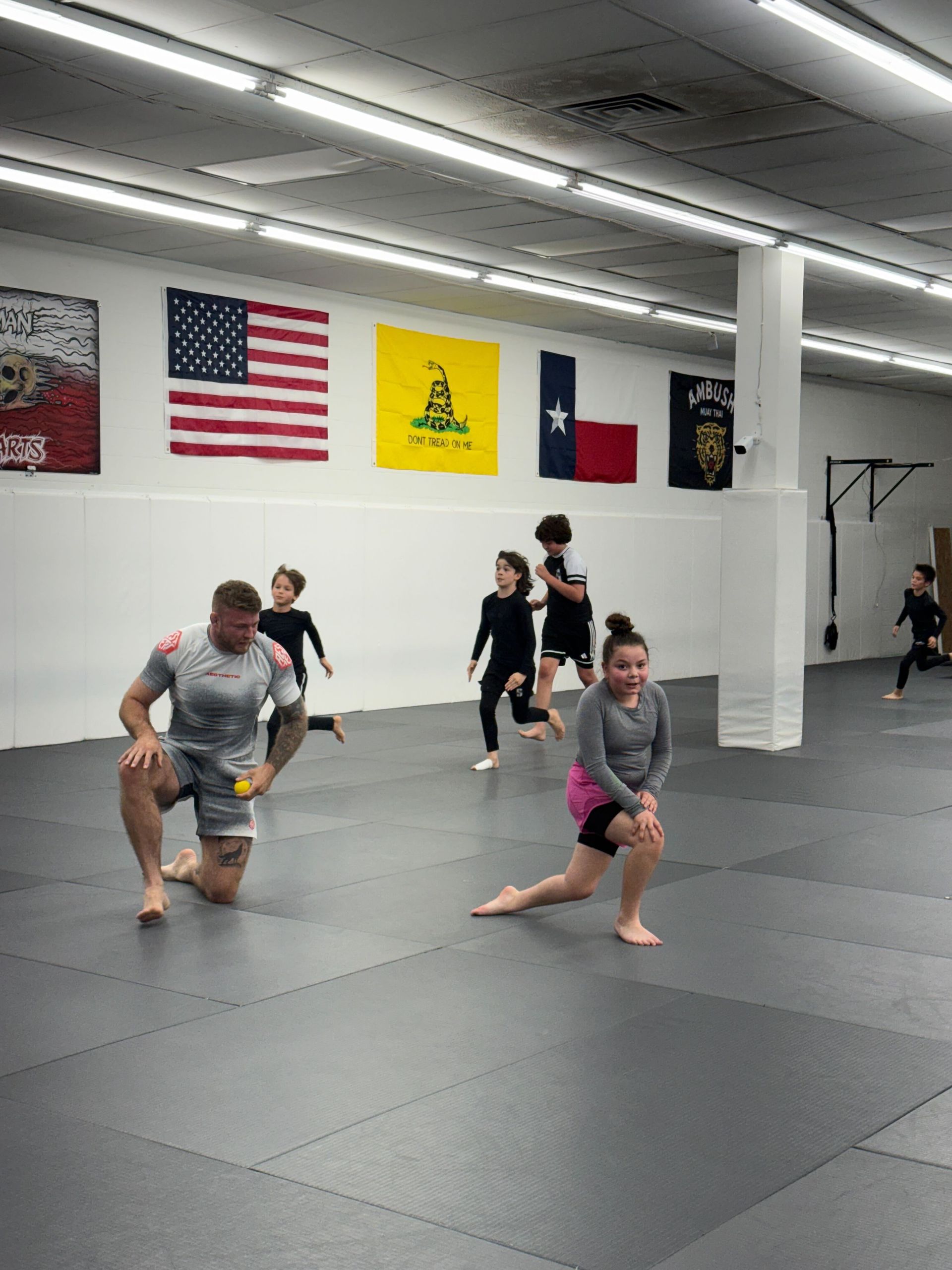
People often ask what a class actually feels like. The short version: structured, focused, and practical. You will learn, drill, and apply skills in a way that matches your experience level.
A typical session usually includes technical instruction, partner drills, and controlled training where you can test what you learned. Over time, you gain comfort with movement, contact, and decision-making. You also learn how to be a good training partner, which is a skill in itself.
The vibe matters, too. We keep the room disciplined and centered on growth, but it is still a place where you can be human. You are allowed to learn slowly. You are allowed to ask questions. You are allowed to have an off day and still train.
How to start training without overthinking it
Starting Martial Arts is easier when you treat it like learning a language. You do not need to be “ready.” You need to begin, then keep showing up.
Here is a straightforward way to approach your first few weeks:
1. Pick a consistent training schedule you can actually keep, even if it is just a couple days
2. Focus on fundamentals and positional understanding rather than chasing flashy techniques
3. Measure progress by small wins like smoother movement, better breathing, and clearer decisions
4. Communicate with training partners and coaches so intensity stays safe and productive
5. Stay patient through the awkward phase because it is normal and it passes
If you do those things, the results tend to compound.
Lifelong skills you can carry anywhere
The best part of Martial Arts is that you keep it. You might move jobs, switch schedules, or go through stressful seasons, but the skills stay in your body and mind.
You learn how to stay calm under pressure, how to keep your balance when things shift, and how to solve problems one step at a time. Those are lifelong tools. And in a city like Austin, where life can move fast, that steadiness is valuable.
Martial Arts in Austin can be a hobby, a stress outlet, a fitness anchor, and a long-term craft, all at once. We think that combination is rare, and worth protecting.
Take the Next Step
If you want training that stays simple, structured, and genuinely growth-oriented, Simple Man Martial Arts is built for that. We keep the focus on fundamentals, clear coaching, and an environment where consistency matters more than ego.
Whether you are looking for South Austin Jiu-Jitsu, a practical way to build confidence, or a long-term Martial Arts practice that fits real life, we are ready to help you start and keep going at Simple Man Martial Arts.
Ready to train? Join a martial arts class at Simple Man Martial Arts today.