Martial arts training is one of the fastest ways to upgrade your confidence, focus, and stress tolerance without changing who you are.
Martial arts can look like a sport from the outside, but in day to day life it often works more like a practice: you show up, you struggle a little, you learn something real, and you walk back out calmer than you arrived. In Austin, that effect is amplified because the city has become a true training hub, with serious athletes, frequent events, and a culture that respects skill.
We built our program around that idea of positive change you can actually use. Not just better cardio, not just more techniques, but a stronger baseline for how you move through your week. If you are searching for martial arts in Austin, you are probably looking for something that feels practical and honest, and that is exactly the standard we hold ourselves to.
Austin is also a place where training stays current. Over the last decade, the city has earned a reputation as the capital of no gi grappling, and local athletes have collected a meaningful share of medals at the highest level of the sport. That momentum matters, because it raises expectations inside the room: you train with purpose, you pay attention to details, and you improve faster than you thought you would.
Why martial arts changes your life outside the gym
Most people start for a simple reason: fitness, confidence, self defense, stress relief. The surprise is how quickly the benefits spill into everything else. We see it in the way students handle uncomfortable conversations, how they carry themselves at work, and how they recover from setbacks without spiraling.
A big part of it is structure. Training gives your week a rhythm, and progress gives you evidence that effort works. When you practice consistently, you learn to trust the process even when you feel off, tired, or distracted.
Another part is contact with reality. Grappling is honest. If your balance is wrong, you get moved. If your timing is late, you feel it. That feedback loop can be humbling, but it is also a relief. It cuts through overthinking and builds a quieter kind of confidence.
Martial arts in Austin, TX and the citywide push toward higher standards
Martial arts in Austin, TX has grown alongside the city itself. More people are looking for training that is functional, not theatrical. More athletes travel here to sharpen skills. More events land here. Even outside sport, Brazilian jiu jitsu is being adopted by law enforcement programs because it supports de escalation and minimal force control, which tells you something important: the skills translate beyond competition.
Austin also benefited from being a place where training culture stayed active through a complicated era. That consistency helped accelerate the migration of serious grapplers and coaches, and it created an environment where you can set ambitious goals without needing to explain why they matter.
For everyday life, that means you are not training in a bubble. You are training in a city where the bar is higher, and that tends to pull you upward if you stick with it.
Our training focus: advanced submission grappling, no distractions
We specialize in submission grappling with a strong no gi emphasis, and our program is designed for advanced practitioners. That includes a key standard that shapes everything we do: we do not accept white belts. It is not an ego thing. It is a clarity thing. When everyone in the room already understands the basics, we can train at a pace that respects your experience.
We also carry a legacy rooted in elite competition. Our gym was formerly known as B Team Jiu Jitsu, founded by ADCC silver medalist Craig Jones, and we continue to operate with that same technical seriousness. Austin has become a major center for no gi grappling, and we take responsibility for adding to that reputation rather than just benefiting from it.
If you have been looking for martial arts in Austin that does not water things down, our approach will feel familiar in the best way.
The everyday wins you can expect from consistent practice
Positive change sounds like a slogan until you can point to specifics. Here are the most common daily life upgrades students report once training becomes a normal part of the week:
• Clearer stress management, because hard rounds teach you how to breathe, reset, and keep solving problems under pressure
• Stronger boundaries and posture, because you get used to taking space and staying balanced when someone is pushing into you
• Better physical durability, with improved grip strength, hips, core control, and conditioning that carries into everything else you do
• Sharper decision making, because grappling is constant prioritization: frames first, escape routes, then offense
• More grounded confidence, because your progress is earned through reps, not hype
Notice what is missing: a promise that every day feels amazing. Some sessions are messy. Some weeks you feel like you forgot everything. That is normal. The positive change shows up anyway, and it tends to be the kind that sticks.
Self defense mindset: leverage, control, and calm
We take self defense seriously, but we do not treat it like a fantasy scenario. Real world safety is mostly about awareness, positioning, and staying composed. Grappling supports that because it teaches you how to control distance, manage grips, and use leverage rather than brute strength.
In practical terms, you learn how to stay stable when someone is heavier or more aggressive. You learn how to survive bad positions without panicking. You learn how to create space and get back to your feet. Those are skills you can actually remember when your heart rate jumps.
This is also why jiu jitsu is increasingly used in professional settings where control matters. If you can manage a resisting person with technique, you reduce chaos. That principle applies at home too, in the sense that you become harder to rattle.
Safety, intensity, and training like an adult
People ask whether martial arts training is safe, and the honest answer is that safety depends on culture and coaching. At the professional level, combat sports injury rates can be high, especially when the goal is a knockout. Our training is different. We are not here to collect unnecessary damage.
We emphasize controlled rounds, smart partner selection, and progressive intensity. You should be able to train hard and still go to work the next day. That does not mean you never get sore or banged up, but it does mean we take prevention seriously: better warm ups, better positioning, and a constant reminder that tapping is not losing, it is training.
If you have been away from training for a while, we will help you ramp up intelligently. Longevity is a skill.
How progress works when you are already advanced
Advanced training can feel weird at first because the gains are smaller and more technical. You stop improving in giant leaps and start improving in inches. The upside is that those inches matter. A slightly better frame, a cleaner entry, a more efficient escape can change your entire game.
We like measurable goals that do not depend on a perfect day. Examples include finishing a sequence under fatigue, surviving a specific position for a full round, or hitting a takedown entry with correct mechanics three times in a session. In Austin, the competitive scene makes it tempting to chase big outcomes, but day to day progress is what actually gets you there.
One practical way we keep things honest is by using competition style benchmarks without making everything about competition. You can train like a competitor even if you never step on a mat under bright lights.
What a typical class feels like
The experience matters, especially if you are fitting training into a busy schedule. While the exact format varies, most sessions include a focused technical block and then live training where you apply it under resistance. Expect detail. Expect coaching that assumes you can handle nuance. Expect rounds where you have to think.
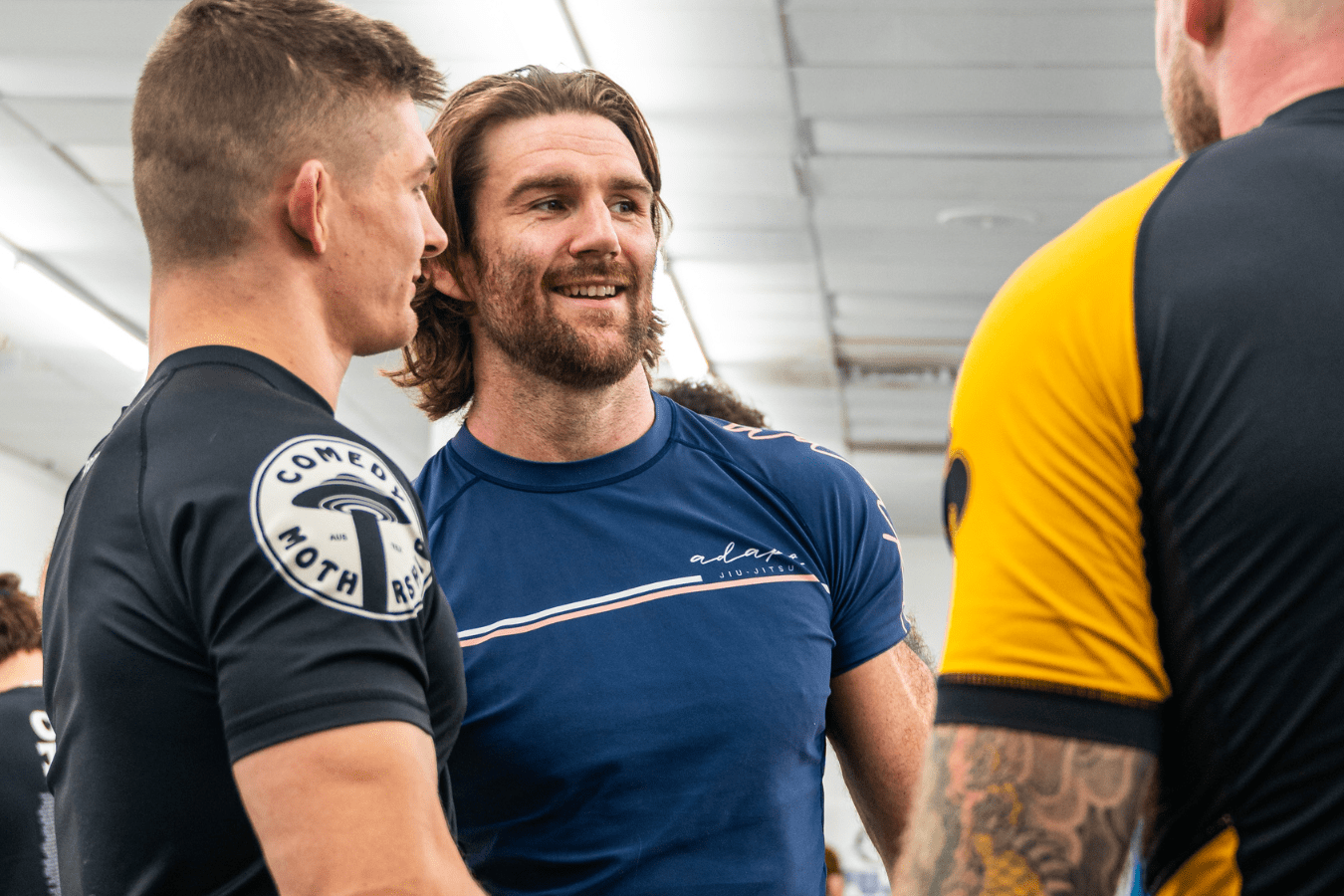
You will also notice a certain tone in the room: serious, but not theatrical. People joke around, sure, but when it is time to work, it is time to work. That mix is part of why martial arts remains so sustainable as an adult habit. It is challenging, but it is also a reset button.
To plan your week, check the class schedule page and choose times you can hit consistently. Consistency beats intensity that comes and goes.
Getting started without overthinking it
If you are ready to train, the simplest path is to treat your first week like information gathering. Show up, learn how we structure rounds, and pay attention to how your body responds. Then you can decide how many sessions per week makes sense.
A straightforward way to begin looks like this:
1. Review the website so you understand what our training focuses on and what to bring
2. Pick a consistent time from the class schedule that matches your real calendar, not your ideal calendar
3. Arrive a bit early so you can settle in, ask questions, and start relaxed
4. Train your first session with the goal of learning pace and positions, not proving anything
5. After a few classes, adjust volume and recovery so you can train hard and stay healthy
That is it. No complicated ritual. Just show up and build momentum.
Take the Next Step
If you want martial arts training that carries over into how you think, work, and handle pressure, we built our environment for exactly that. The city’s grappling culture is strong, but the real value is what you take home afterward: steadier confidence, better stress control, and a body that feels capable.
You can experience that approach firsthand at Simple Man Martial Arts, where our advanced, no gi focused submission grappling program is designed for practitioners who want serious training and real progress in Austin.
Ready to take the next step? Join a martial arts class at Simple Man Martial Arts today.