
The right training session can quiet a loud mind, strengthen your stress response, and leave you steadier than you arrived.
Austin moves fast, and your nervous system feels it. Between long workdays, traffic, constant notifications, and the pressure to keep up, stress can turn into something stickier like anxiety, low mood, or burnout. We see it every week: people walk in feeling scattered, tense, or mentally tired, and walk out standing a little taller with a calmer face and a clearer head.
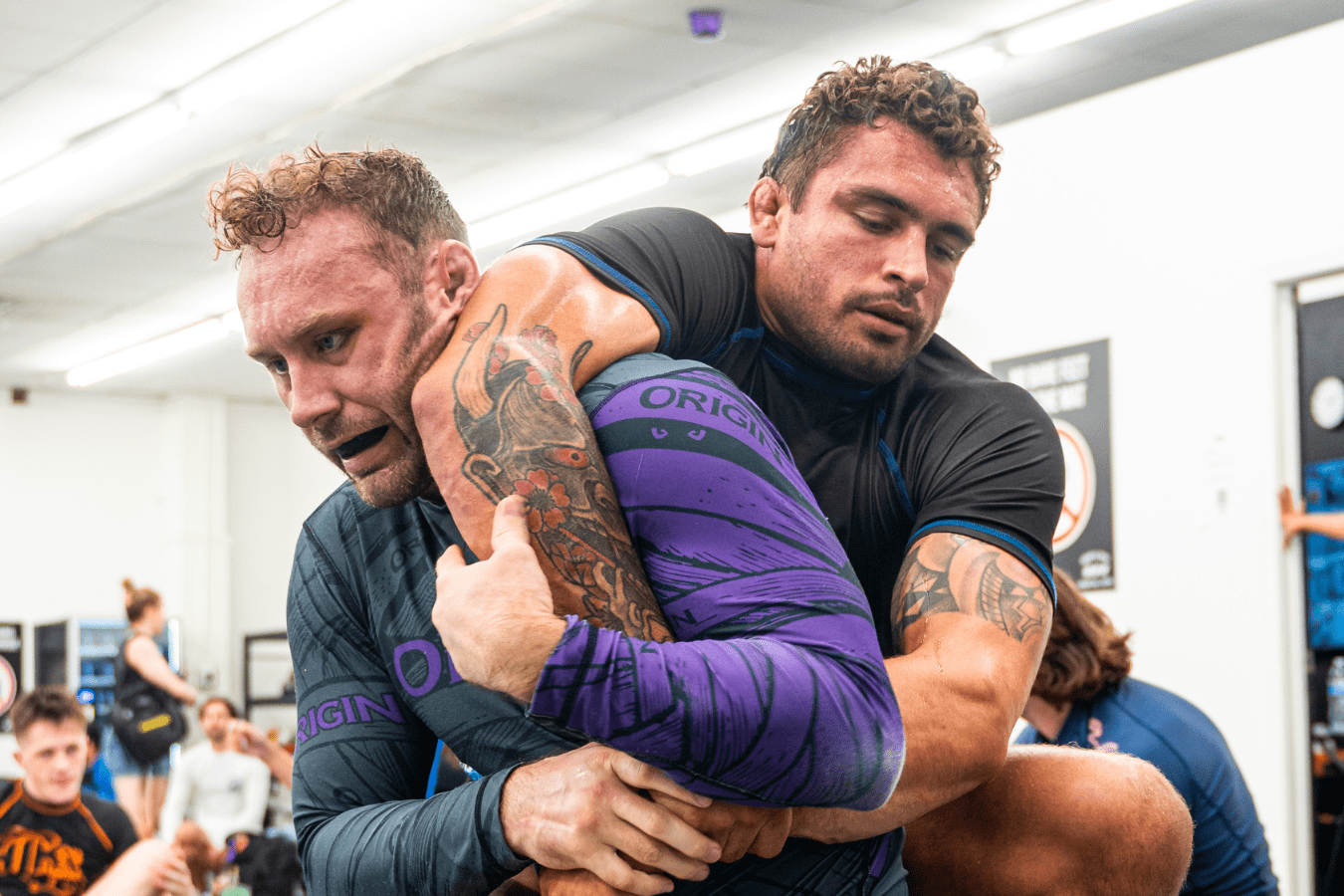
Martial arts works for mental health in a way that surprises a lot of beginners. Yes, it is physical training, but it is also skill practice, emotional regulation, and social connection wrapped into one hour. Research consistently links martial arts and combat sports participation with reduced anxiety and depression symptoms, improved subjective well-being, and better stress management. In plain terms, your body learns how to downshift and your mind learns how to recover.
In this guide, we will break down how martial arts training supports resilience, what changes you can realistically expect, and how to start in Austin without overcommitting or feeling overwhelmed.
Why martial arts helps your brain, not just your body
When you train, your brain is not only reacting to exercise. It is also adapting to a structured challenge where you practice focus, self-control, and problem solving under just enough pressure to grow. That combination is a big reason martial arts shows measurable mental health benefits across different ages and backgrounds.
Endorphins are real, but the deeper change is emotional regulation
A good class can lift your mood quickly. Part of that is endorphins, and part is the way training metabolizes stress. When you hit pads, drill combinations, and move with intention, you are channeling emotion into something constructive instead of letting it loop in your head.
Studies on martial arts and combat sports point to improvements in emotional intelligence and self-esteem, plus reductions in stress hormones like cortisol. It is not magic. It is repetition: you show up, your body works, your breathing changes, and your mind gets a break from constant rumination.
Structure builds stability when life feels messy
Mental health often improves when your week has anchors. Training gives you a predictable routine: warmup, skill work, partner drills, conditioning, cooldown. Your brain learns to expect challenge and then recover from it, which is basically resilience practice.
We also keep training progressive, which matters. You do not get thrown into the deep end on day one. You learn fundamentals, stack skills, and earn intensity over time. That sense of momentum is powerful for confidence, especially if you have been feeling stuck.
Martial arts in Austin, TX: why resilience matters here
Austin has plenty of sunshine and good tacos, but it is also a high-output city. Our community includes tech professionals managing deadline cycles, creatives juggling inconsistent schedules, students under academic pressure, and parents trying to keep a household running. Remote work can add another layer: fewer in-person interactions, more screen time, and a weird blur between work and rest.
Martial arts in Austin fits naturally into the local wellness culture because it gives you something many workouts do not: skill-based progress and real accountability. You are not just burning calories. You are learning timing, balance, distance management, and self-protection concepts, and your brain likes that kind of tangible growth.
The other underrated part is community. Training beside familiar faces week after week makes it easier to stay consistent, and consistency is where the mental health benefits really accumulate.
What the research says about resilience and stress management
Resilience is not about never feeling stress. It is about recovering faster and responding with more control. Recent research trends from 2023 to 2025 keep highlighting martial arts as a promising non-pharmacological support for well-being, anxiety reduction, and resilience building.
One study comparing practitioners with non-practitioners found notably higher psychological resilience in stress management and control, including a mean score difference around 21.96 for practitioners, with a moderate effect size (Cohen’s d about 0.47). Another resilience dimension, viewing challenges as opportunities, also improved (Cohen’s d about 0.27). Numbers aside, the takeaway is simple: training changes how you handle pressure.
We see that play out in everyday situations. Students tell us meetings feel less intimidating, difficult conversations feel more manageable, and stressful moments do not escalate as quickly. That is resilience showing up where it counts.
The “moving meditation” effect: mindfulness without sitting still
Mindfulness is often recommended for anxiety, but not everyone wants to sit quietly with a racing mind. Martial arts can work as moving meditation because attention has a job. You have to notice your stance, your guard, your breathing, and the timing of each strike. There is no room to doom scroll in your head when you are drilling a combination correctly.
Over time, you build a habit of returning to the present moment. That skill transfers. When stress hits outside the gym, it is easier to breathe, re-center, and respond instead of reacting.
Breathing is a mental health tool you can practice every class
We coach breathing naturally through pacing and technique, and you can get more intentional with it as you go. A simple pattern is to exhale on strikes and keep your shoulders relaxed. That one change alone can reduce tension and help your nervous system stay regulated under effort.
Confidence that is earned, not hyped
Confidence grows when you do hard things in a controlled environment and prove to yourself that you can handle them. Martial arts does that repeatedly. You learn a skill, you practice it, you make mistakes, you adjust, and you get better. That process builds self-efficacy, which research links to improved well-being and lower anxiety.
This matters for self-defense too, but it also matters for daily life. When you trust your ability to learn and adapt, challenges feel less personal and more solvable.
Here are a few confidence shifts we commonly see:
- You feel more comfortable taking up space, even in stressful environments
- You second-guess yourself less because you have evidence of progress
- You recover from a bad day faster because training teaches reset and repeat
- You stop needing perfect conditions to start, since practice is the point
Focus and attention: why martial arts helps with ADHD-like symptoms
A lot of people struggle with focus, whether it is diagnosed ADHD or just modern life doing what it does. Martial arts can help because it trains attention in short, repeatable cycles. You focus for a drill, you rest, you focus again. That rhythm is easier than trying to concentrate for long stretches with no structure.
Training also gives immediate feedback. If your guard drops or your footwork slips, you notice right away. That feedback loop encourages present-moment awareness without judgment, and it makes focusing feel practical instead of abstract.
In time, students often report:
- Better ability to start tasks instead of procrastinating
- Less mental “noise” after class, especially in the evening
- Improved sleep quality from physical effort and reduced stress arousal
Will martial arts make you more aggressive?
This is one of the most common questions, and the evidence points the other direction. Research links martial arts participation with reduced aggression, impulsivity, and violence or rule-breaking compared to non-participants. That makes sense when you think about how training is built: control, respect, safety, and consequences for reckless behavior.
We teach intensity with discipline. You learn how to generate force and, just as important, how to stop it. That skill tends to make people calmer outside of class, not more reactive.
A realistic timeline: when you might notice mental health benefits
Some changes are immediate. Many people feel a mood lift right after a session, partly because of endorphins and partly because stress has somewhere to go. Other changes take a little more time because they rely on habit formation and skill mastery.
A realistic timeline looks like this:
1. After the first few classes: a noticeable post-class calm, better sleep the same night, and a sense of “I did something good for myself”
2. Around 2 to 4 weeks of consistency: improved energy and more stable mood during the week, plus better tolerance for everyday stress
3. Around 4 to 6 weeks: clearer confidence, better focus, and more predictable routines that support resilience
4. Beyond that: deeper identity shifts, where you see yourself as someone who can handle hard things
The key is consistency over intensity. Two to three sessions per week is a strong baseline for most adults, especially if your goal includes mental health and stress reduction.
Avoiding burnout: how to train hard without overloading your life
Research also notes that commitment can dip in certain dimensions when training becomes too intense or life gets overloaded. That is normal. The goal is to build resilience, not to add another stressor.
We recommend starting with a pace you can keep even on a busy week. If you are exhausted, you can still show up and train at a moderate intensity. That counts. You will still get the mental reset and the long-term benefits.
Simple ways to keep training sustainable
- Pick two consistent class days and treat them like appointments
- Fuel and hydrate before class so effort feels manageable
- Take one full rest day each week to let your nervous system recover
- Track mood before and after training in a quick note on your phone
- Talk to our coaches about scaling intensity when work or school spikes
What you can expect from our programs and class experience
We design the program so beginners can start without feeling out of place. You will learn fundamentals first, then build complexity. Classes are structured, coached, and progressive, with clear goals for each session.
Our training environment is also intentionally social, but not awkward. You will work with partners, learn to communicate clearly, and practice being calm under pressure. That combination supports mental resilience in a very practical way.
What a typical class supports mentally
Even without thinking about “mental health goals,” a well-run class tends to deliver:
- A focused hour away from screens and constant input
- Safe exposure to manageable stress, followed by recovery
- Skill-based wins that build confidence and self-efficacy
- Community connection that counters isolation
- A physical outlet that reduces anxious energy and tension
Take the Next Step
Building resilience is not about toughing it out alone. The most reliable path is a practice that trains your body and your mind together, week after week, in a setting that keeps you safe and progressing. That is exactly what we aim to deliver, especially for people navigating the pace of Austin.
If you want martial arts in Austin, TX that supports mental health in a grounded, skill-first way, we would love to help you start with a plan you can actually sustain. When you are ready, Simple Man Martial Arts is here to guide your first class and your next steps with steady coaching and a clear structure.
Train with focus and consistency by joining a martial arts class at Simple Man Martial Arts.